Sensory Processing Disorder Symptoms and Treatment Methods: Understanding Sensory Sensitivity in Children
Sensory integration is the process by which a child organizes and makes sense of sensory information coming from the environment (touch, movement, sound, light, body awareness, etc.) and produces appropriate responses. Many children may occasionally be bothered by noise, dislike certain clothes, or seem “overly” fond of active play. However, if these reactions significantly affect daily life and make the child’s play, school, sleep, nutrition, and social participation difficult, it may be necessary to evaluate them more closely in terms of “sensory processing disorder symptoms.”
In addition to “sensory processing disorder” (often referred to as Duyu Bütünleme Bozukluğu in Turkish), terms like “sensory processing difficulty” or the term used in international literature, “SPD (Sensory Processing Disorder),” may be heard. The important point here is: This article is prepared not to diagnose, but to raise awareness for families and caregivers. Because similar symptoms can overlap with conditions such as autism, ADHD, anxiety, and developmental coordination disorder (dyspraxia). The most accurate path is an evaluation by a specialist who looks holistically at the child’s sensory profile, developmental milestones, and functionality in daily life.
Below you will find comprehensive answers to questions such as “what is sensory integration?”, “how is sensory sensitivity understood?”, “how does sensory integration therapy proceed?”, and which methods are used within the scope of “SPD treatment”.
What is Sensory Integration? (What Function Does it Serve in Daily Life?)
Sensory integration is the brain’s organization of sensory data coming from the body and the environment to produce a meaningful “response.” This process is not limited to only the five senses. Three systems play a very critical role in child development:
- Vestibular system (balance-movement): Regulates movements such as swinging, spinning, jumping, and going up and down stairs.
- Proprioceptive system (muscle-joint/body awareness): Helps understand where the body is and how much force it is applying.
- Tactile system (touch): Important in interactions with textures such as clothing contact, hair brushing, hand washing, sand, and play dough.
When sensory integration works well, a child can sit in class and listen to the teacher, adjust pencil pressure, respect a friend’s space while playing, not get stuck on clothing labels while dressing, and may be more open to trying new foods. When sensory information is perceived as “too much” or “insufficient,” the child may develop reactions such as avoidance, excessive seeking, freezing/shutdown, or outbursts of anger to manage the environment.
Therefore, when sensory sensitivity is interpreted solely as “grumpiness” or “stubbornness,” both the child and the family struggle. The correct approach is to understand the sensory need underlying the behavior and support the child in self-regulation.

Sensory Processing Disorder (SPD) Symptoms: Examples by Age and Environment
“Sensory processing disorder symptoms” can vary from child to child. The healthiest perspective is to observe symptoms both according to age and in the context of the home-school-social environment. The examples below can be thought of as a checklist; a single symptom does not necessarily mean there is a problem, but if multiple are intense and persistent, an expert opinion is valuable.
Symptoms in the 0–3 Age Period
- Excessive reaction to being held/touched (crying, pulling away) or conversely little reaction to touch
- Difficulty falling asleep, frequent waking; marked restlessness during routine changes
- Selectivity in feeding: avoiding textured foods, excessive reaction to certain textures, gagging
- Excessively seeking movements like rocking, spinning, or intensely avoiding movement
- Marked difficulty in care routines such as hair cutting, nail cutting, and bathing
Preschool (3–6 Years) Symptoms
- Avoiding activities like swings/slides at the playground or moving incessantly
- Being overly fixated on stimuli like clothing labels, seams, or socks
- Covering ears, crying, or fleeing in crowded and noisy environments
- Difficulty initiating play; inability to wait for a turn (sometimes related to the need for sensory regulation)
- Tiring quickly in fine motor activities like using scissors, coloring, or shaping dough
School Age (6+ Years) Symptoms
- Difficulty sitting in class, fidgeting in the chair; feedback that they “cannot stay still”
- Pressing too hard or holding the pencil too lightly while writing (proprioceptive difficulties)
- Coordination difficulties in sports activities, difficulty in ball games
- Startling at sudden noises, sensitivity to light; quickly “overflowing” (getting overwhelmed) in crowds
- “Shutting down” at the end of the day, anger outbursts; intense discharge at home after school
Sensory Response Patterns: Hyper, Hypo, and Sensory Seeking
- Hypersensitivity (hyper-reactivity): Stimuli such as sound, touch, smell, and light feel “too much” to the child.
- Under-responsiveness (hypo-reactivity): The child perceives some stimuli as “too little”; may not turn when called, may have a high pain threshold.
- Sensory seeking: A constant need for intense movement such as jumping, running, crashing into things, tight hugging, or spinning may be seen.
- Motor planning (dyspraxia) difficulties: Learning a new movement or planning sequential tasks (dressing steps, setting up a game) may be difficult.
These symptoms sometimes manifest in the area of balance and coordination as well. For more clues on this subject, you can check out this article: How to Understand Balance and Coordination Problems in Children?
When Should Professional Support Be Sought? (Red Flags)
Not every sensory difference requires therapy. However, if the following situations exist, it is important not to delay an evaluation:
- If daily life skills are affected: If dressing, bathing, brushing teeth, and eating proceed with constant crises
- If there is a loss of function at school: If attention, sitting, following instructions, and peer relationships are significantly strained
- If sleep and feeding problems are persistent: Selectivity is increasing, weight/energy is affected, sleep patterns are disrupted
- If intense anger outbursts/meltdown reactions are becoming frequent (especially with triggers like crowds, noise, light)
- If the child seeks movement at a level that endangers themselves or their environment (uncontrolled jumping, jumping from heights, etc.)
Evaluation is usually done through a detailed history taking, sensory profile analysis, observation of play and movement, and examination of participation in daily life. In this process, the occupational therapy approach often stands out; because the goal is not only to “reduce the symptom” but to increase the child’s participation in daily life. Related to this topic, the following content may also be guiding: Occupational Therapy for Children: How Daily Living Skills Develop?
Sensory Integration Therapy and SPD Treatment: Which Methods Are Used?
“Sensory integration therapy” is generally a play-based intervention approach structured according to the child’s needs, aiming for the sensory systems to work more regularly. The answer to the question frequently asked by families, “How is SPD treatment done?”, is not a single method; often an individualized plan is required.
Primary Goals of Therapy
- Increasing the child’s self-regulation skills (managing moments of overwhelm/shutdown)
- Developing more functional responses to sensory stimuli
- Increasing independence in daily life skills (dressing, feeding, sleep routine, school participation)
- Supporting motor planning, balance, coordination, and body awareness
How Do Sessions Usually Proceed?
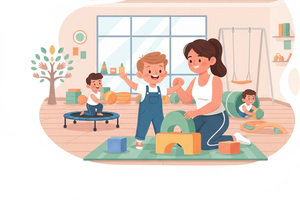
- In an environment that is safe and motivating for the child, swings, climbing, balance equipment, different textures, and play materials can be used.
- The therapist selects activities that are “right at the edge but achievable” for the child, supporting the sensory system in a graded manner.
- The goal is not to force the child; it is to help regulate the nervous system with the right dose of stimuli.
Home Program and School Collaboration
To transfer the skills gained in the therapy room to daily life:
- Small arrangements at home that facilitate routines (light, sound, transition preparation)
- Communication with the teacher (classroom seating arrangement, movement breaks, strategies to reduce sensory load)
- “Sensory break” ideas suitable for the child can be planned.
At this point, a play-based approach is very valuable. If you are interested, this article may also give you ideas: Combining Play Therapy and Physiotherapy: How Do Children Heal?
The Question “How Many Sessions Does It Take?”
There is no single answer to the question of how long sensory integration therapy takes. The child’s age, severity of symptoms, accompanying developmental needs, home-school support, and goals determine the process. Generally, progress evaluations are made at regular intervals and the plan is updated.
Practical Tips for Supporting Sensory Sensitivity at Home
Suggestions applicable at home must be chosen with the child’s safety and individual needs in mind. There is no “one size fits all program”; nevertheless, the following steps can be a good start for many families:
- Announce transitions in advance: Short and clear warnings like “We are moving to the bath in 5 minutes” can reduce meltdowns.
- Make clothing adjustments: Cutting tags, choosing options without irritating seams, and soft textures can be soothing for children with sensory sensitivities.
- Noise/crowd management: In environments like shopping, choosing quieter hours, going in and out for short periods, and using headphones if necessary can work.
- Meet the need for movement safely: Proprioceptive activities such as a mini obstacle course inside the house, “push-pull” games with pillows, or wall push-ups can be regulating for some children.
- Small steps in feeding: Introducing new foods through steps like smelling-touching-licking instead of forcing them to eat is a more sustainable way to manage selectivity.
If you have additional questions about motor development milestones for your child, the following content may be a good complement: 0-12 Month Baby Motor Development Milestones and Supportive Games